

[countdown_timer date=”2026-05-21T00:01″ days=”0″ hours=”0″ minutes=”0″ seconds=”0″ size=”1″]
Global Accessibility Awareness Day (GAAD) on 21st May 2026 is an annual event focused on improving digital access and inclusion for people with disabilities. It is an important opportunity for staff to reflect on how teaching, learning, communication, and student support can become more accessible and inclusive.
Accessibility is a responsibility belonging to academic and professional services staff who all play a role in removing barriers to participation.
This entails guaranteeing that any content, systems and learning experiences are designed as accessible and inclusive to all, including disabled, neurodivergent, international, mature users and those using assistive technologies. It not only benefits the student experience, but every individual involved at any stage of the process from creator to recipient.
Why is accessibility important in Higher Education?
Principal factors:
- Legal responsibilities: Equality Act, 2010 and Public Sector Bodies Accessibility Regulations, 2018
Meet the requirements of equality and accessibility regulations – GOV.UK. - Ethical Commitments: inclusivity and equality.
- Student success and wellbeing: removes barriers to learning and provides an inclusive environment for all.
- Inclusive teaching practices: equal access to educational resources and opportunities.
Want to know more about accessibility tools?
♥ Be sure to check out our selection of accessibility tools and some
tips on creating inclusive teaching and learning experiences.
Link: Accessibility Tools
Top Ten Tips for Accessible Teaching – check out our suggested tips in the infographic below
This Infographic is also available in a different format for accessibility.
Link: Top Ten Tips for Accessible Teaching
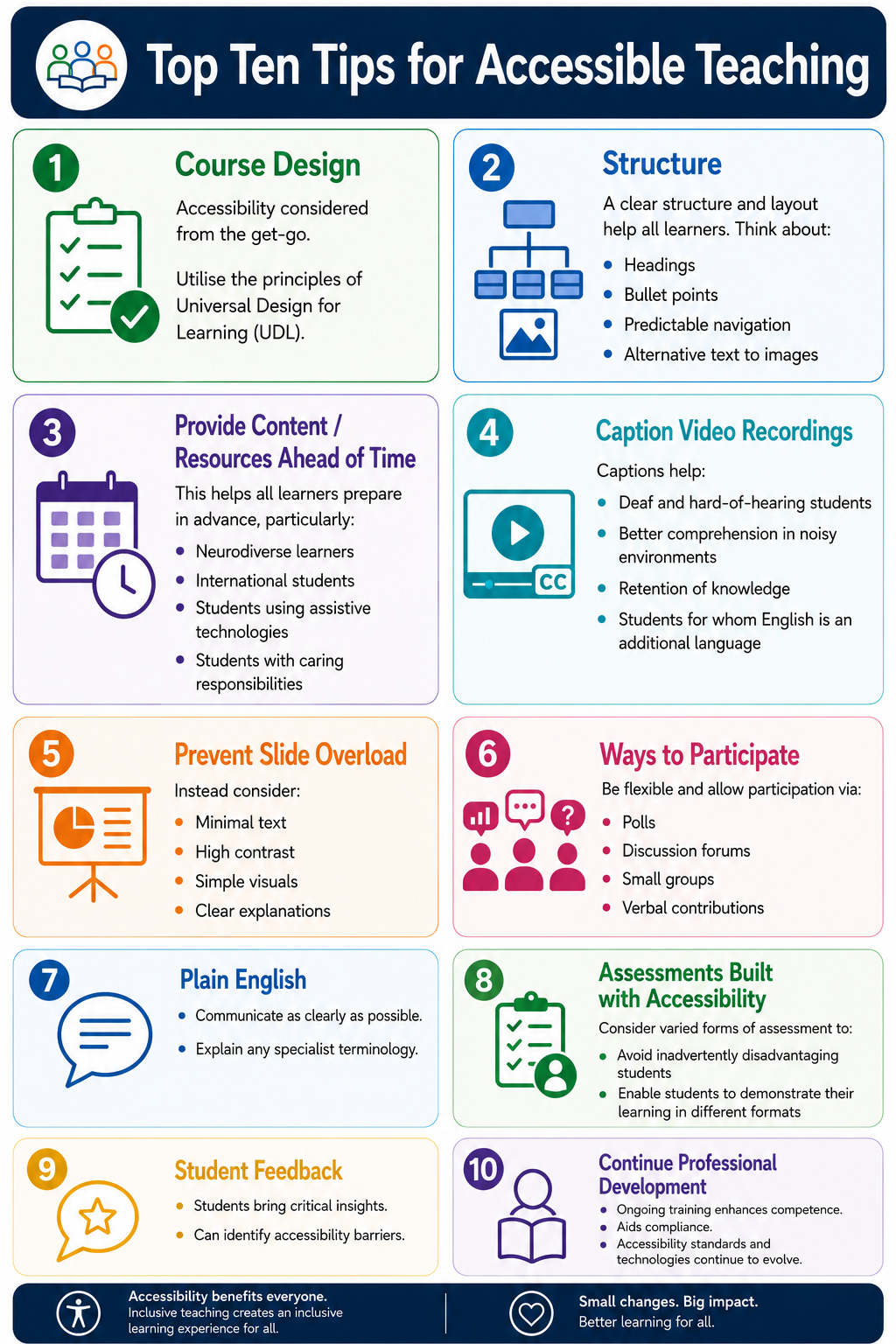
Note: Infographic created using ChatGPT